
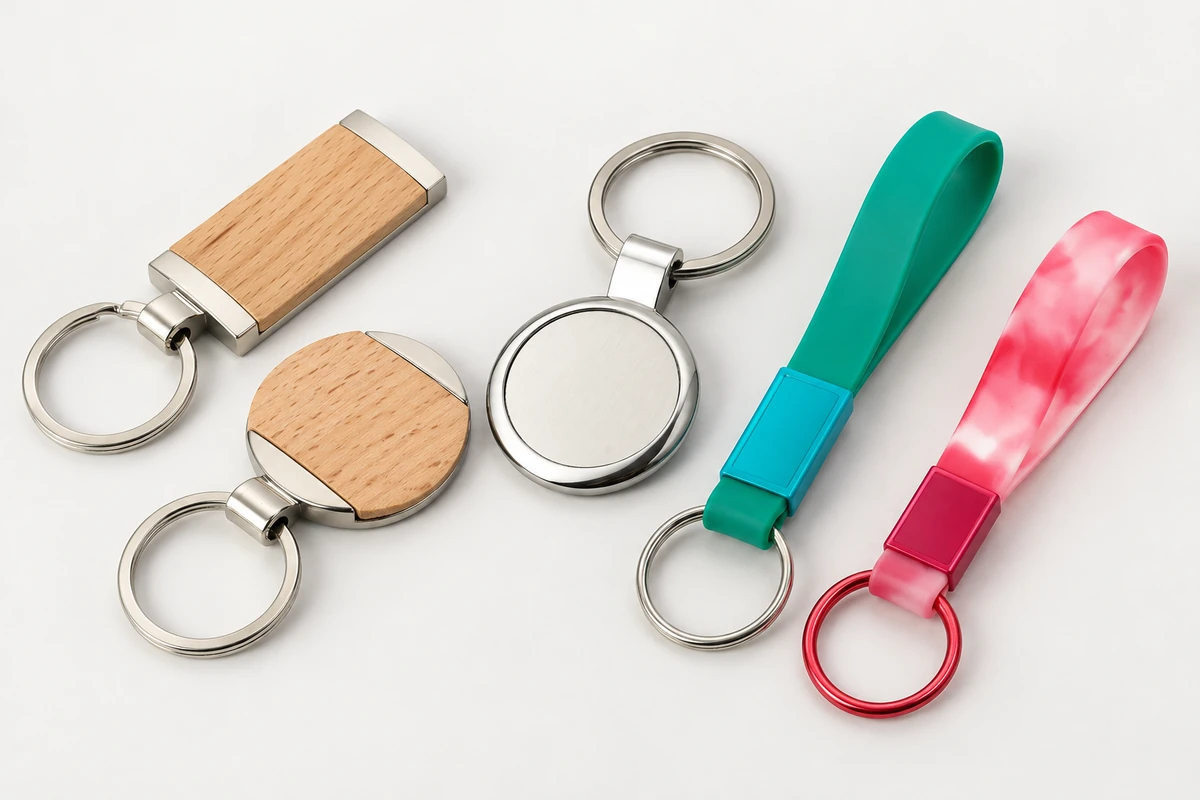
Choose a keychain’s material and dimensions together. A flat acrylic charm, a layered leather tag, and a stuffed plush character need different thickness decisions, even if their front views look similar. Start with the material references below, then specify the actual shape and construction on a dimensioned drawing.
Our metal size reference is 20–80 mm, while acrylic is 30–100 mm and plush is 50–150 mm. These are category references from our product information, not a universal measurement standard or a promise that every design works throughout each range. Identify whether your stated size means height, width, diameter, or another dimension.
This guide helps buyers comparing materials for the same project. Browse our custom keychain collections alongside it to match the size discussion to the product you want to develop.
What Size References Apply to Each Keychain Material?
The chart gives KeychainWise’s current category references. It does not define all values as length, diameter, or longest dimension. Confirm that measurement basis before using a range to select a design.
| Material or construction | Category size reference | Thickness and specification notes |
|---|---|---|
| Metal | 20–80 mm | 1.5–5 mm; confirm relief and assembled structure. |
| PVC | 30–100 mm | Set base thickness and raised details on the drawing. |
| Silicone | 30–100 mm | Specify the molded body or strap construction. |
| Acrylic | 30–100 mm | 2–5 mm; confirm layers and added surface effects. |
| Leather | 30–90 mm | Confirm individual layers, folded areas, and hardware. |
| Wood | 30–100 mm | 2–6 mm; identify the wood and finished construction. |
| Embroidered & fabric | 30–90 mm | Confirm finished edges, layers, and any filling. |
| Plush | 50–150 mm | Specify finished height, width, and depth. |
| Resin | 30–80 mm | Confirm the mold, domed surface, and embedded pieces. |
| Functional | 40–100 mm | Size follows the actual mechanism and assembled parts. |
Only metal, acrylic, and wood have numerical thickness ranges in these references. For the other categories, thickness or depth must be specified for the proposed construction. Do not treat an unlisted value as a standard thickness.
Why Does the Same Outline Feel Different in Different Materials?
Front-view dimensions show how much space a keychain occupies on a drawing. They do not describe its complete shape. Molded relief, folded leather, embroidered borders, and plush filling all change the finished product.
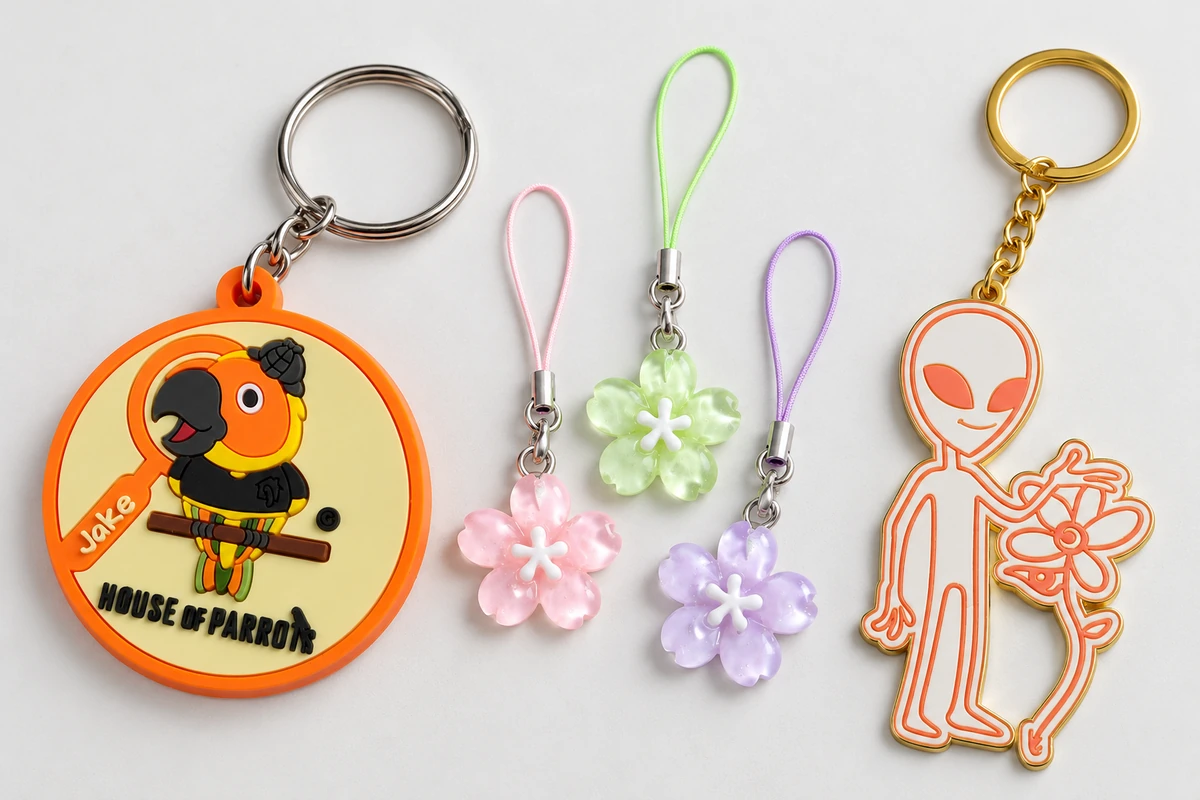
Consider a hypothetical 50 mm tall character. Printed acrylic can show the artwork on a flat face. PVC may interpret the colors as raised areas. Plush needs separate decisions about body depth, seams, and facial details. Keeping the height unchanged does not make these three constructions equivalent.
When comparing options, ask for the body dimensions, finished depth, and assembled size with the chosen attachment. Review weight on an actual sample if carrying comfort matters; dimensions alone cannot tell you how a finished keychain will feel on a set of keys.
How Should You Choose Keychain Thickness?
Choose thickness to support the design and intended handling. Picking the thickest available option is not a substitute for reviewing the shape.
- Metal: 1.5–5 mm reference. Discuss the metal, flat or raised artwork, and whether the body includes a rotating insert or another assembled part. State where the thickness is measured when surfaces have different levels.
- Acrylic: 2–5 mm reference. Clarify whether the dimension describes the acrylic body or the finished construction. Layered, domed, and liquid-filled designs need their own section view; a flat-sheet value does not describe every style.
- Wood: 2–6 mm reference. Specify the chosen wood and outline before settling on thickness. Include narrow sections and the attachment area in the drawing so the design can be assessed as a whole.
- Other materials: specify the structure. For PVC and silicone, distinguish the base from raised details. For leather, identify layers and folds. For fabric and plush, agree on the finished condition in which thickness or depth will be measured.
These are design review points, not thickness guarantees for every shape. The proposed material, decoration, and attachment still need to be checked together.
Which Material and Size Direction Suit Your Project?
Start with what the buyer needs to see or handle, then compare two practical size proposals within the relevant category reference.
- Compact brand mark: begin with a simple metal, acrylic, or wooden shape. Review the logo at its actual printed or engraved size before reducing the body.
- Colorful character artwork: compare acrylic for a printed face with PVC for molded details. Keep the silhouette recognizable and simplify details that become unclear at the proposed scale.
- Hotel or membership tag: compare leather, metal, or wood around the number and logo layout. Reserve space for the attachment and edges before deciding the outer dimensions.
- Soft bag accessory: compare plush with embroidered or fabric construction. Assess how the finished piece hangs, and whether a flat design or a filled character better suits the artwork.
For a first comparison, you might request 40 × 30 mm and 50 × 40 mm front-view proposals for a flat tag. These are illustrative drawing sizes, not universal recommendations or confirmed production specifications. Keep the same artwork and attachment concept so the comparison is useful.
What Should You Specify When Changing Materials?
Changing material can require more than copying an outline. Review these points before the new version goes to sampling:
- Decoration area: show the logo, lettering, and any border on each material proposal. A full-color printed image and a stitched image may need different artwork treatment.
- Attachment location: identify the hole, loop, tab, or sewn attachment. Keep it visible on the drawing rather than leaving it hidden beneath the ring.
- Depth and layering: include a side view for folded leather, raised PVC, resin inclusions, and filled products.
- Functional parts: retain the space needed for the selected mechanism. Do not shrink a tool or assembled accessory simply to match a decorative charm.
If several materials belong to one collection, decide whether consistent front-view size, consistent hanging length, or a similar visual presence matters most. Those are different design targets. Share the priority with the supplier so each material can be developed accordingly.
How Do You Check the Size Before Approving Production?
First, inspect an actual-size drawing. Print it at 100% scale and verify a marked dimension with a ruler. Compare the artwork and outer shape with the intended key set, bag attachment, or display card.
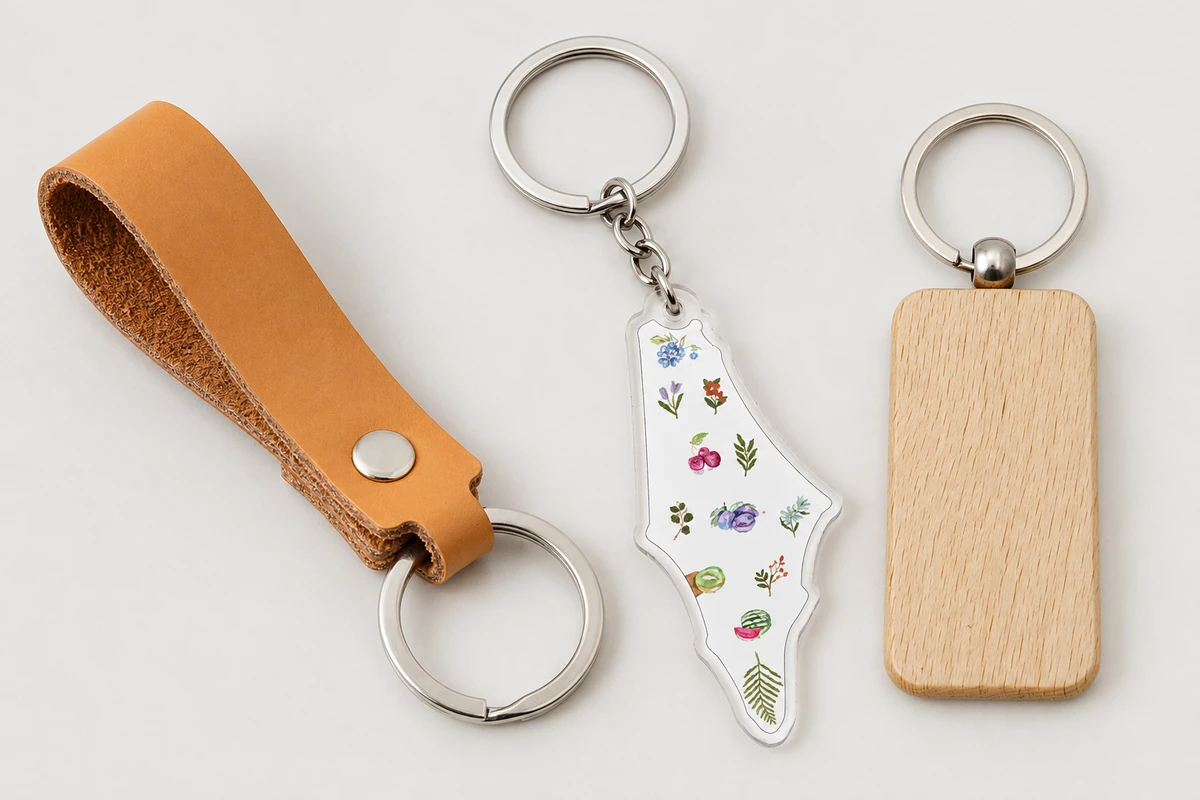
Then review a sample in the proposed material. Check front, back, and side views against the dimensioned drawing. For soft products, agree on the measurement condition; compressing a plush body or stretching a fabric loop changes the result.
Record any revision by dimension and location, such as “increase body width” or “move the attachment above the artwork.” Update the drawing and sample reference together. Confirm the acceptable dimensional variation for that project rather than assuming every material shares one tolerance.
Our sample development process supports reviewing dimensions, appearance, and construction before the approved production specifications are finalized.
Choose a Size That Works With the Material
Use the material chart to open the discussion, then select a complete construction: body shape, dimensions, thickness or depth, artwork, and attachment. The best proposal is the one that presents the design clearly and works in the intended setting. Approve it through the drawing and physical sample together.
Key Takeaways
- Treat the listed sizes as material category references; define the measurement direction on your drawing.
- Metal, acrylic, and wood have published thickness references of 1.5–5 mm, 2–5 mm, and 2–6 mm respectively.
- Specify layers, folds, relief, or filling when a single thickness value cannot explain the construction.
- Compare the actual-size artwork and a sample before approving the final dimensions.
Frequently Asked Questions
Explore Materials and Sample Development
- Custom metal keychains: materials, finishes, and shapes
- Custom acrylic keychains: printed and layered styles
- Sample development: confirm dimensions and construction
Send your artwork, preferred materials, proposed dimensions, attachment, and order quantity. We can review the construction and help define the details to confirm in a sample.
Discuss Your Keychain Size